
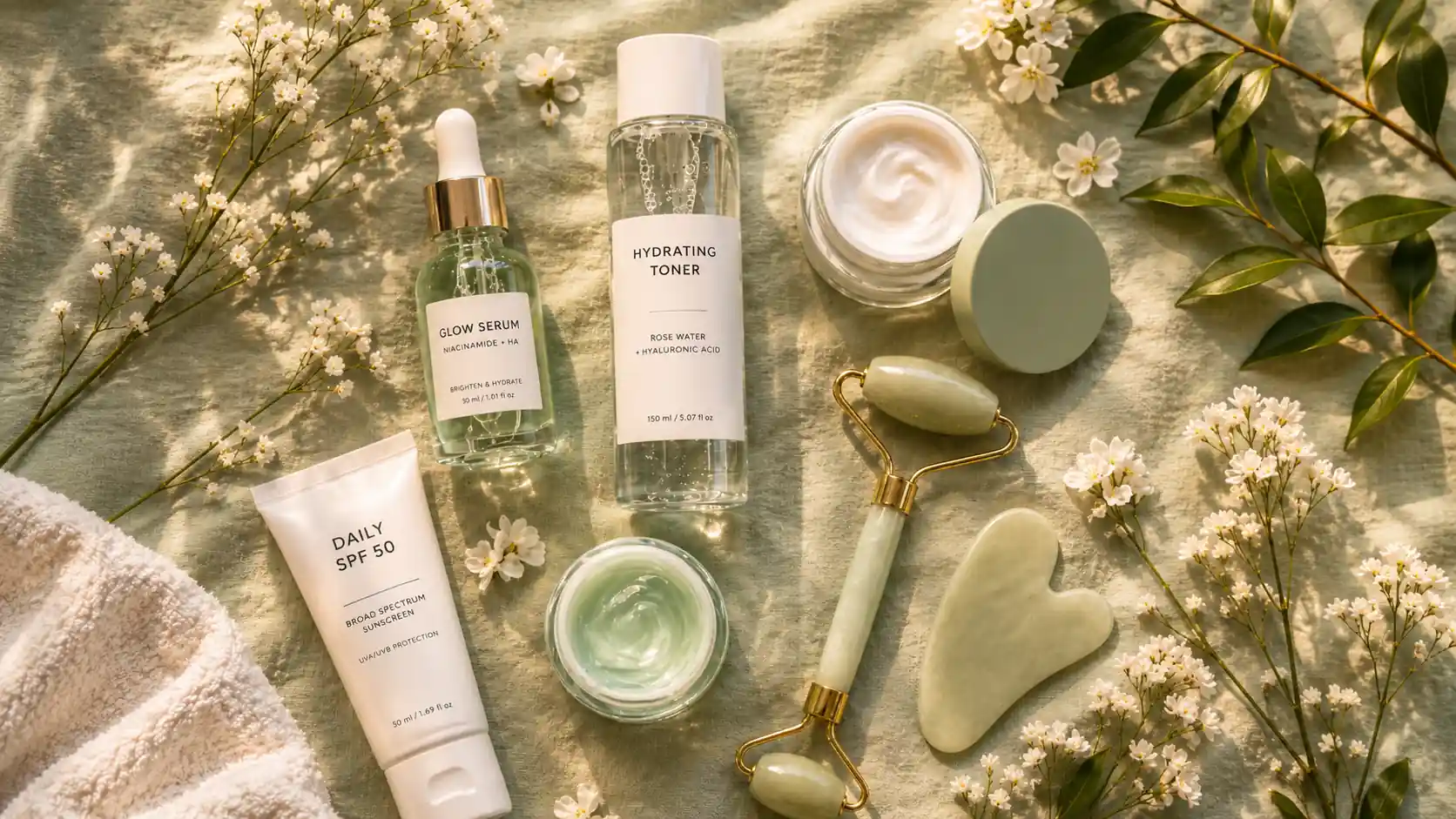
Your complete seasonal guide to glowing, protected, and healthy skin no matter your skin type.
Did you know that UV radiation is up to 60% more intense in summer than in cooler months and that fewer than 30% of adults apply sunscreen consistently? That gap between awareness and action is exactly where skin damage silently begins.
Your summer skin routine is your skin’s first and most powerful line of defense. Rising heat, relentless humidity, air conditioning, chlorinated pools, and a climbing UV index all create a perfect storm of stress for your complexion. What worked flawlessly in January can actively work against you in July.
Whether your skin runs oily, dry, combination, sensitive, or normal, this expert-backed guide delivers everything you need: summer skincare tips, a step-by-step morning routine, the best summer skincare products, and pro-level advice to keep your skin radiant all season long.
What Is a Summer Skin Routine — and Why Does It Matter?
A summer skin routine is a seasonally adapted skincare protocol designed to address the unique environmental stressors of warm-weather months. It differs from a winter routine in its focus on lightweight hydration, aggressive UV protection, and oil-and-sweat management.
During summer, your skin undergoes significant physiological changes:
- Sebaceous glands overproduce oil in response to heat, leading to shine, congestion, and breakouts
- Transepidermal water loss increases, meaning your skin dehydrates faster even though you’re sweating more
- UV exposure accelerates melanin production, causing hyperpigmentation, uneven tone, and long-term collagen breakdown
- Sweat and sunscreen residue accumulate on the skin surface, clogging pores if not properly cleansed
The fix isn’t complicated but it does require intention. Adapting your routine to the season is one of the most science-backed habits in dermatology, and the results become visible within just a few weeks.

Summer Skincare Tips for Every Skin Type
Not all skin behaves the same way in the heat. Here’s exactly what your skin type needs this summer:
Oily Skin: Control the Shine Without Stripping
Heat throws oily skin into overdrive. The result? Excess shine, enlarged pores, mid-day breakouts, and persistent congestion especially across the T-zone.
Key summer skincare tips for oily skin:
- Cleanse twice daily with a foaming or gel-based, sulfate-free cleanser to clear excess sebum without triggering rebound oiliness
- Replace your moisturizer with a lightweight, oil-free gel formula containing hyaluronic acid
- Choose a mattifying, broad-spectrum sunscreen with zinc oxide, which controls shine while protecting UV
- Add a niacinamide serum (5–10%) clinically proven to regulate sebum production and minimize pores
- Keep oil-blotting papers on hand for mid-day touch-ups without disturbing SPF
Dry Skin: Hydrate More Strategically
Counterintuitively, dry skin often gets more dehydrated in summer. Air conditioning, swimming, and prolonged sun exposure all accelerate moisture loss.
Key summer skincare tips for dry skin:
- Use a gentle, cream-based or micellar cleanser that removes impurities without disrupting the skin’s lipid barrier
- Layer a hyaluronic acid serum onto damp skin before moisturizer it draws moisture from the air directly into skin cells
- Choose a cream-formula SPF that delivers hydration alongside UV protection in one step
- Apply a ceramide-rich night cream to actively rebuild the skin barrier while you sleep
- Avoid long, hot showers they dissolve the natural oils that protect dry skin from environmental stress
Combination Skin: Balance Without Compromise
Combination skin in summer is a constant negotiation oily across the forehead, nose, and chin while the cheeks stay normal or even dry.
Key summer skincare tips for combination skin:
- Use a balanced, pH-neutral cleanser that addresses oil without over-drying drier zones
- Apply a BHA toner (salicylic acid 1–2%) to oily areas only it exfoliates inside the pore and reduces congestion
- Use a lightweight hybrid SPF-moisturizer to simplify your morning routine
- Spot-treat the T-zone with clay masks once weekly to absorb deep-seated excess oil
Sensitive Skin: Protect the Barrier First
Summer heat is a known trigger for redness, flushing, and flare-ups in sensitive skin particularly for those managing rosacea or eczema.
Key summer skincare tips for sensitive skin:
- Commit exclusively to fragrance-free, hypoallergenic, dermatologist-tested formulas non-negotiable in summer
- Use mineral sunscreen (zinc oxide or titanium dioxide) rather than chemical SPF, which can cause stinging and irritation
- Limit exfoliation to once per week using a gentle enzymatic formula never physical scrubs
- Refrigerate your serums and moisturizer cooled products reduce inflammation and soothe on contact
- Always patch test new products on the inner forearm for 48 hours before applying to your face

Normal Skin: Maintain and Boost
Normal skin is more forgiving in summer but that’s no reason to skip the seasonal upgrade.
Key summer skincare tips for normal skin:
- Upgrade to a lightweight SPF moisturizer as your daily base to streamline morning steps
- Incorporate a Vitamin C serum (15–20% L-ascorbic acid) every morning to protect against UV-induced free radical damage
- Exfoliate 2–3 times per week with an AHA to maintain clarity and long-term radiance
How to Protect Skin in Summer: A Step-by-Step Morning Routine
If you’re wondering exactly how to protect skin in summer on a daily basis, this expert-approved morning routine works across all skin types simply adjust product textures to match your needs.
Step 1: Gentle Cleanse Use a sulfate-free, pH-balanced cleanser to remove overnight oil and sweat without disrupting the skin’s natural barrier. Warm never hot water only.
Step 2: Apply a Vitamin C Serum Vitamin C is your first-line antioxidant defense against UV-generated free radicals. Apply 3–5 drops to clean, slightly damp skin and allow 60 seconds of absorption before moving forward.
Step 3: Lightweight Moisturizer Apply a water-based or gel moisturizer suited to your skin type. For dry skin, choose one with hyaluronic acid and ceramides. For oily skin, a non-comedogenic gel works best.
Step 4: Broad-Spectrum SPF 30 or Higher (Non-Negotiable) This is the single most evidence-backed step in any summer skin routine. Apply generously, dermatologists recommend at least ¼ teaspoon for the face and neck. Apply 15 minutes before sun exposure and reapply every 2 hours outdoors.
Step 5: Hydrating Facial Mist (Optional) A mineral-infused facial mist seals in moisture and provides instant cooling especially helpful in dry, air-conditioned environments or during outdoor commutes.
Pro Tip: Apply sunscreen before your foundation and finish with an SPF setting powder for continuous all-day protection without reapplication disrupting your makeup.
Best Summer Skincare Products: What to Look For
Finding the best summer skincare products doesn’t require an expensive overhaul — it requires choosing the right ingredients for your skin’s seasonal needs.
| Product Category | Hero Ingredients to Prioritize |
| Sunscreen | Zinc oxide, titanium dioxide, SPF 30–50, non-comedogenic |
| Cleanser | Salicylic acid (oily), ceramides (dry), micellar water (sensitive) |
| Moisturizer | Hyaluronic acid, niacinamide, glycerin, squalane — oil-free |
| Serum | Vitamin C (AM), retinol or peptides (PM), niacinamide (anytime) |
| Exfoliant | Glycolic acid, lactic acid, salicylic acid, or enzyme-based formulas |
| Eye Care | Caffeine, peptides, SPF-infused undereye formulas |
| Lip Care | SPF 30 lip balm with shea butter and ceramides |
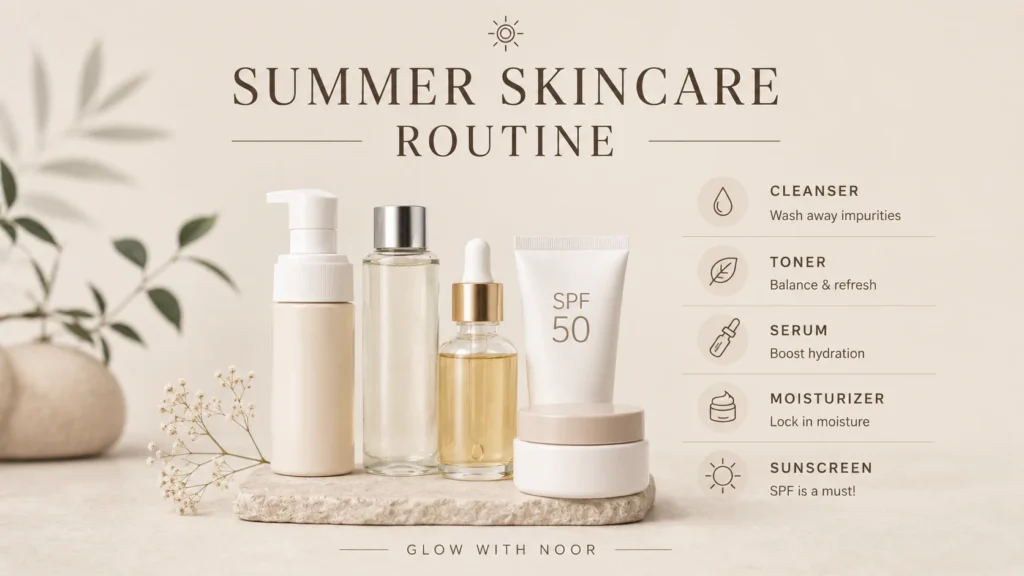
Moreover, antioxidant-rich eye creams are frequently skipped in summer routines. The undereye area is among the first regions to show UV-related aging address it proactively and consistently.
Common Summer Skin Mistakes That Silently Damage Your Complexion
Even well-intentioned routines fall short because of these frequent, avoidable errors:
- Skipping SPF on cloudy days — Up to 80% of UV radiation penetrates cloud cover. No exceptions, ever.
- Over-exfoliating in the heat — More than 3 times per week strips the acid mantle faster than it regenerates, causing inflammation and sensitivity.
- Using heavy, occlusive creams during the day — These trap sweat beneath the skin, causing heat rash and congestion.
- Neglecting the neck and décolletage — These areas receive as much sun exposure as the face yet are routinely forgotten — and they age faster.
- Skipping post-sun repair — After prolonged outdoor exposure, always apply a cooling aloe vera gel or centella asiatica serum to calm and actively repair heat-stressed skin.
- Not hydrating from within — No topical product can fully compensate for internal dehydration. Aim for at least 8 glasses of water daily throughout summer.
Your Summer Skin Routine: Final Thoughts
Your skin doesn’t take a summer vacation — and neither should your skincare. A well-built summer skin routine, adapted to your specific skin type, anchored by daily SPF, and powered by smart hydration, is one of the highest-return investments you can make in your long-term health and appearance.
Start simple: cleanse, protect, and hydrate. Layer in targeted treatments once your skin adjusts. Reapply sunscreen without compromise. And remember — consistency always outperforms any single miracle product on the market.
This summer, give your skin the seasonal upgrade it deserves. Your future complexion will genuinely thank you for it.
Ready to explore more expert skincare guides, curated product edits, and seasonal beauty routines? Visit FashionEliteX.com — your trusted source for fashion-forward, science-backed beauty advice.

FAQ Section
Q1: What should a complete summer skin routine include?
A summer skincare routine should include a gentle cleanser, Vitamin C serum, lightweight moisturizer, and SPF 30+ sunscreen in the morning. At night, cleanse thoroughly and use a repairing serum with a nourishing moisturizer.
Q2: How often should I exfoliate during summer?
Most people should exfoliate 1–2 times per week with a gentle AHA or BHA product. Sensitive skin should limit exfoliation to once weekly.
Q3: What SPF level is best for the face in summer?
SPF 30 is suitable for daily use, while SPF 50 is better for extended outdoor activities. Always choose a broad-spectrum sunscreen that protects against UVA and UVB rays.
Q4: Should I skip moisturizer if my skin feels oily in summer?
No, oily skin still needs hydration. Use a lightweight, oil-free moisturizer to keep skin balanced without feeling greasy.
Q5: How can I protect my skin from sun damage naturally in summer?
Along with sunscreen, wear protective clothing, sunglasses, and hats, and avoid peak sun hours. Antioxidant-rich foods and Vitamin C serum can provide extra support against sun damage.
Q6: Is a separate day and night routine really necessary in summer?
Yes, daytime skincare focuses on protection with SPF and antioxidants, while nighttime skincare supports repair and skin recovery with restorative ingredients.